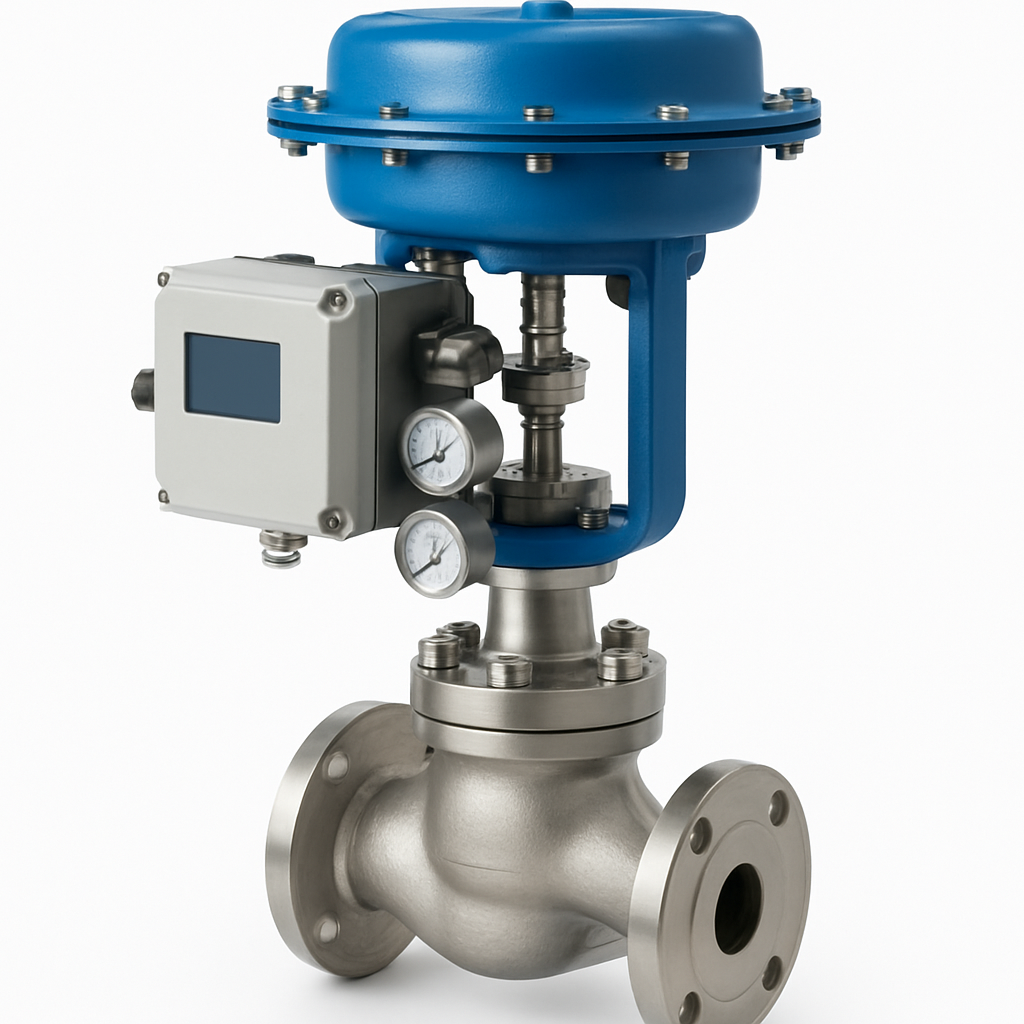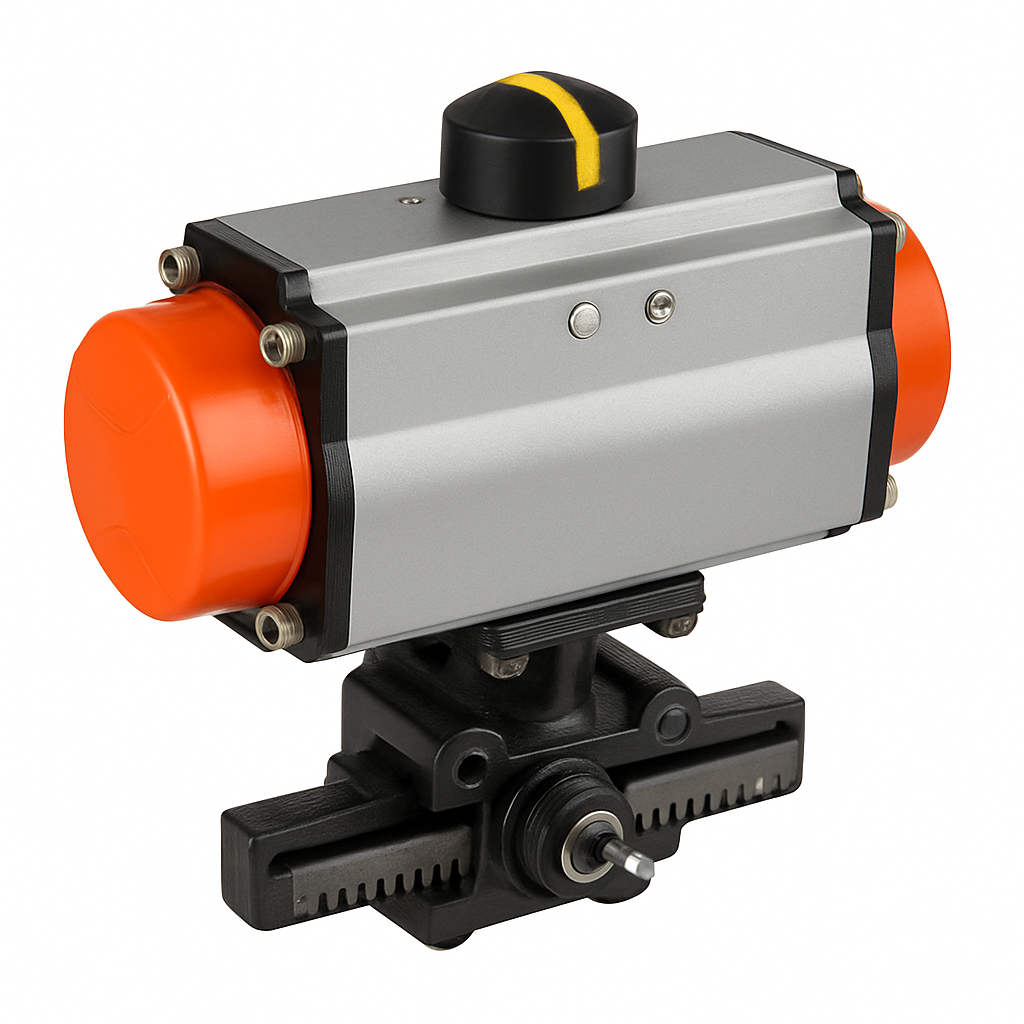
Step-by-step guide to correctly sizing pneumatic rack & pinion and scotch-yoke actuators for quarter-turn valves, including safety factor calculations.
Correct actuator sizing is critical to reliable valve automation. An undersized actuator will fail to operate the valve; an oversized one wastes air and can overstress the valve shaft.
Step 1 — Determine Valve Torque Requirements
The breakaway torque is the highest torque value and occurs when opening a closed valve against full line pressure. It is significantly higher than running torque.
Required torques to check: - Break-open torque (BOT): Torque to start opening a closed valve - Running torque (RT): Torque to continue moving the disc/ball - Break-close torque (BCT): Torque to start closing an open valve - End-of-travel torque: Torque to seat the disc/ball at end of stroke
Step 2 — Apply Safety Factor
Industry practice applies a safety factor of 1.25 to 1.5 to the highest valve torque value to arrive at the minimum required actuator torque.
Minimum actuator torque = Valve breakaway torque × Safety factor
Step 3 — Select Actuator Type
- **Rack & Pinion**: Most compact, best for small to medium torques (20 Nm – 20,000 Nm)
- **Scotch-Yoke**: Better torque profile matching valve requirements at end-of-travel, preferred for large valves and ball valves
Step 4 — Specify Air Supply Pressure
Most actuators are rated at standard air supply pressures of 4.5 bar, 5.5 bar or 6.2 bar. Actuator output torque scales linearly with supply pressure.
AIRA provides free actuator sizing support — submit your valve data sheet and we will specify the correct actuator model and size.
AIRA Euro Automation's engineering team publishes technical guides and application notes based on 30+ years of industrial valve manufacturing experience.